
Easy Turkey Gravy from Pan Drippings (Smooth, Rich and Lump-Free)

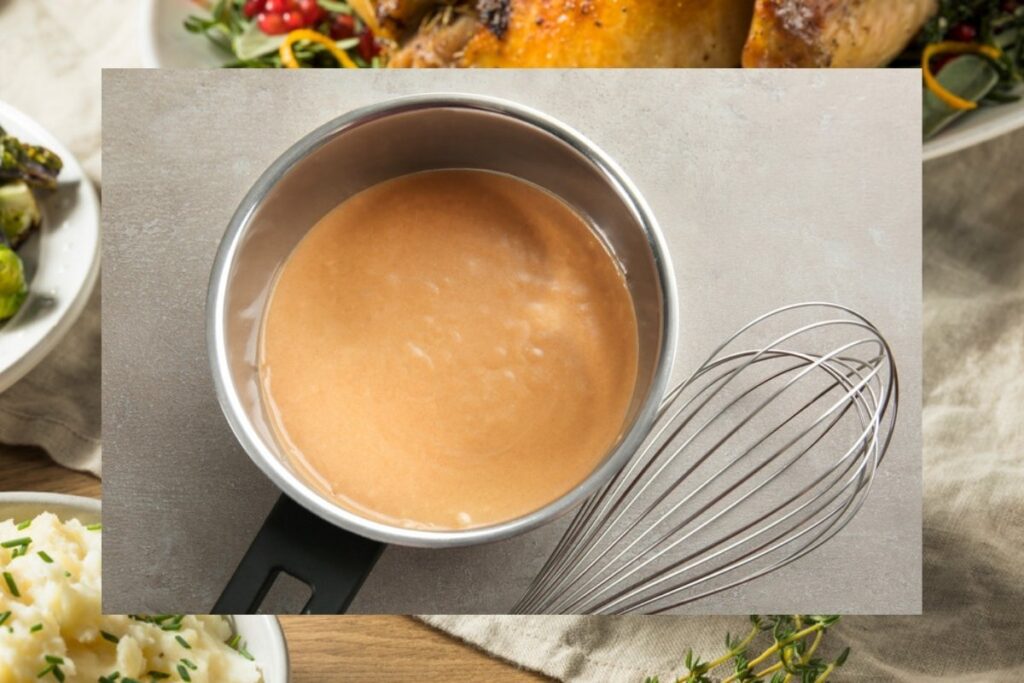
The turkey gets all the attention, but ask anyone at the table what they reach for twice and the answer is usually gravy. It goes over the turkey, the mashed potatoes, the stuffing, and the second helping of all three. The good news is that a rich, smooth turkey gravy takes about 20 minutes, and most of the flavor is already sitting in the bottom of your roasting pan.
This recipe walks you through making gravy from pan drippings step by step, with the ratio that keeps it from turning thin or gluey, plus a make-ahead version, fixes for lumps, and how to store and reheat leftovers safely.
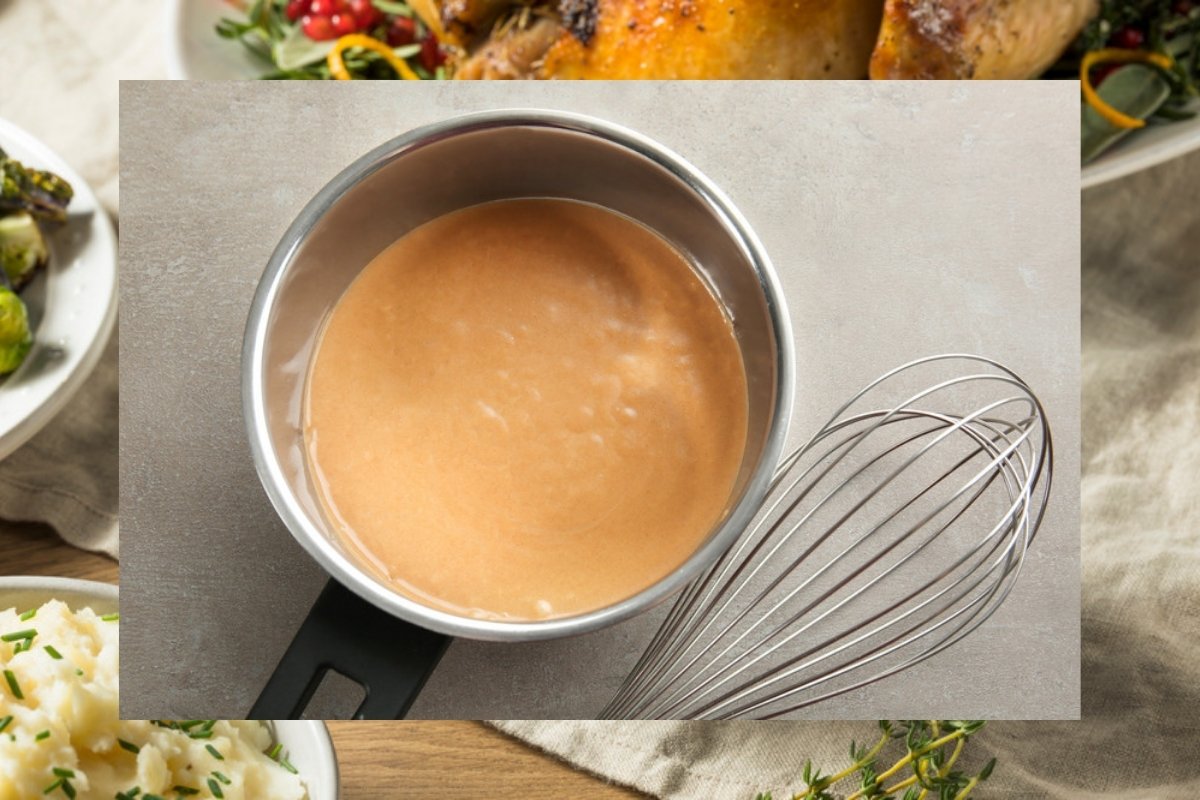
Why You'll Love This Gravy
- Real roast flavor. The browned bits stuck to the pan are where the deep, savory taste comes from. Nothing from a packet comes close.
- A simple ratio you can remember. One tablespoon of fat and one tablespoon of flour for every cup of liquid gives you a gravy that coats a spoon without turning into paste.
- No lumps. Cooking the flour in fat first (a roux) and adding the liquid gradually is the trick that keeps it silky.
- Flexible. Short on drippings? Top up with stock. Want it done before the guests arrive? Use the make-ahead method below.
Ingredients
Makes about 4 cups, enough for 8 to 10 people.
- Pan drippings from 1 roasted turkey
- 1/4 cup (60 ml) turkey fat skimmed from the drippings (top up with unsalted butter if you don't have enough)
- 1/4 cup (about 32 g) all-purpose flour
- About 4 cups (950 ml) low-sodium turkey or chicken stock, warmed
- 1 teaspoon chopped fresh thyme leaves (or 1/2 teaspoon dried)
- 2 to 3 fresh sage leaves, finely chopped (optional)
- 1 teaspoon soy sauce or Worcestershire sauce (optional, for deeper color and flavor)
- Salt and freshly ground black pepper, to taste
Equipment: a fine-mesh strainer, a fat separator or a large glass measuring cup, a medium saucepan, and a whisk.
How to Make Turkey Gravy from Drippings
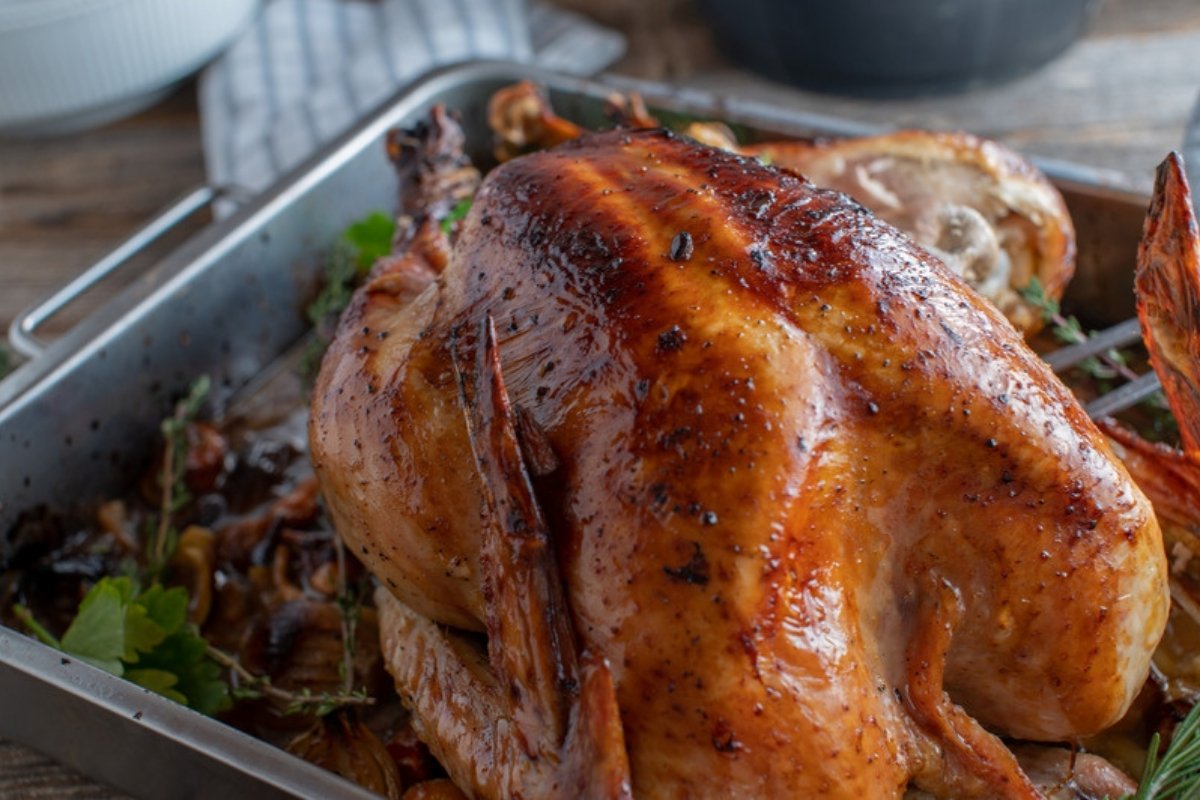
Step 1: Collect and separate the drippings
Once the turkey comes out of the oven (it's done when the thickest part of the thigh and breast reads 165°F on a meat thermometer), move it to a cutting board to rest. Pour the liquid from the roasting pan through a fine-mesh strainer into a fat separator or a large glass measuring cup. Let it stand for about 5 minutes so the fat rises to the top.
Step 2: Deglaze the roasting pan
Set the empty roasting pan over two burners on medium heat. Pour in 1 cup of the warm stock and scrape up all the browned bits with a wooden spoon. Let it bubble for a minute, then strain this liquid into the measuring cup with the drippings. Don't skip this step: those brown bits carry most of the flavor.
Step 3: Measure the fat and liquid
Spoon or pour off 1/4 cup of the fat from the top of the drippings. If you come up short, add butter to make 1/4 cup. Discard the rest of the fat or save it for roasting potatoes. Now measure the defatted drippings plus the deglazing liquid, and add enough of the remaining stock to reach 4 cups total.
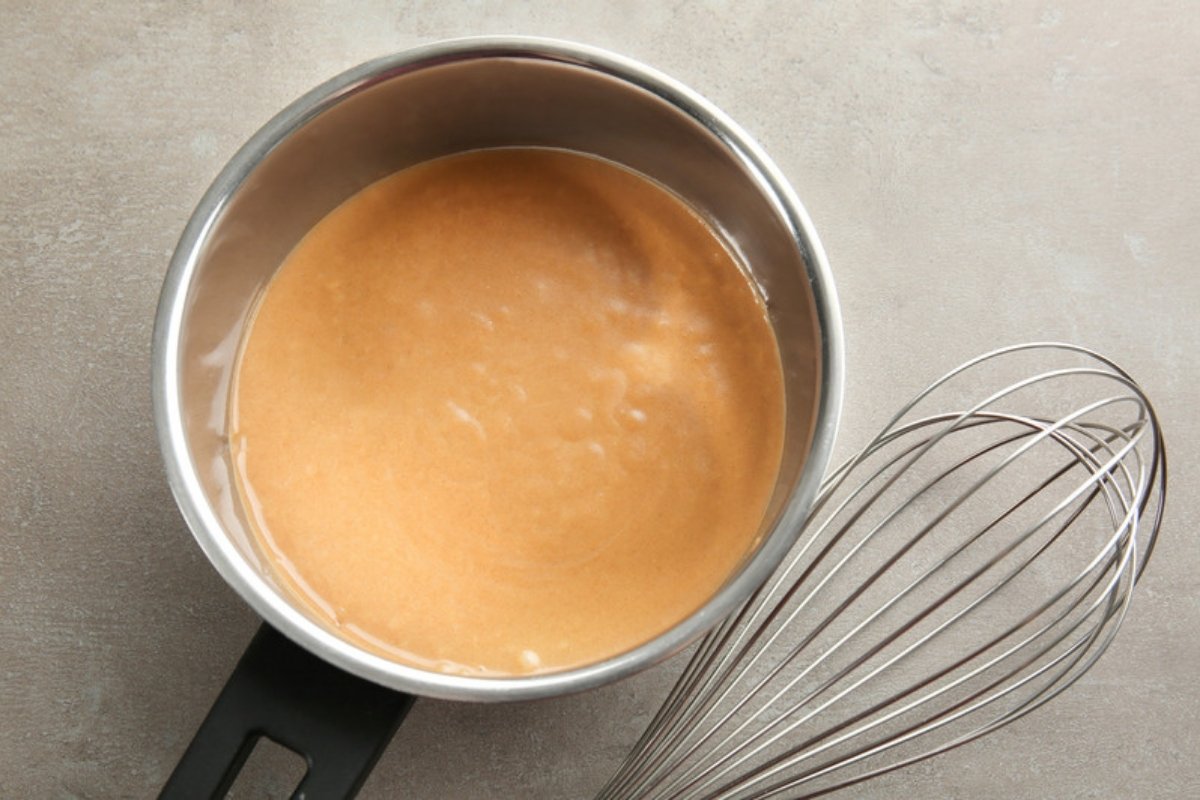
Step 4: Cook the roux
Heat the 1/4 cup of fat in a medium saucepan over medium heat. Sprinkle in the flour and whisk constantly for 2 to 3 minutes, until the mixture is smooth, light golden brown, and smells a little nutty. This cooks out the raw flour taste.
Step 5: Whisk in the liquid gradually
Pour in about 1 cup of the warm liquid while whisking. The mixture will thicken quickly and look like paste; keep whisking until smooth, then add the next cup. Continue until all 4 cups are in. Adding the liquid in stages is what keeps lumps away.
Step 6: Simmer and season
Bring the gravy to a simmer, add the thyme, sage, and soy sauce or Worcestershire if using, and let it bubble gently for 8 to 10 minutes, stirring often. It's ready when it coats the back of a spoon and a line drawn through it with your finger holds. Taste first, then add salt and pepper. Drippings can be salty, so always season at the end. For an extra-smooth finish, pour it through the strainer one more time before serving.
Tips for the Best Gravy
- Use warm stock. Cold liquid hitting a hot roux is more likely to form lumps.
- Too thin? Let it simmer a few minutes longer. It also thickens as it cools slightly.
- Too thick? Whisk in more warm stock, a few tablespoons at a time.
- Lumpy? Pour it through a fine-mesh strainer, or blend it with an immersion blender for a few seconds.
- Pale gravy? Cook the roux a minute or two longer, or add the soy sauce. A darker roux gives a deeper color.
- Not enough drippings? That's common with a smaller bird or a covered roast. Use butter for the fat and good stock for the liquid; the deglazed pan bits will still add flavor.
Substitutions and Variations
- Gluten-free: Skip the flour. Bring the 4 cups of liquid to a simmer, then whisk in 3 tablespoons of cornstarch mixed with 1/3 cup cold water or cold stock. Simmer for 1 to 2 minutes, until thickened and glossy.
- Herb gravy: Add a sprig of rosemary while it simmers and remove it before serving.
- Creamy gravy: Stir in 2 to 3 tablespoons of heavy cream at the end.
- Make-ahead gravy: Make the recipe up to 2 days early using 4 tablespoons of butter for the fat and all stock for the liquid. Refrigerate it, then on the day, deglaze the roasting pan with a little stock and whisk those drippings into the gravy while you bring it to a boil.
How to Serve It
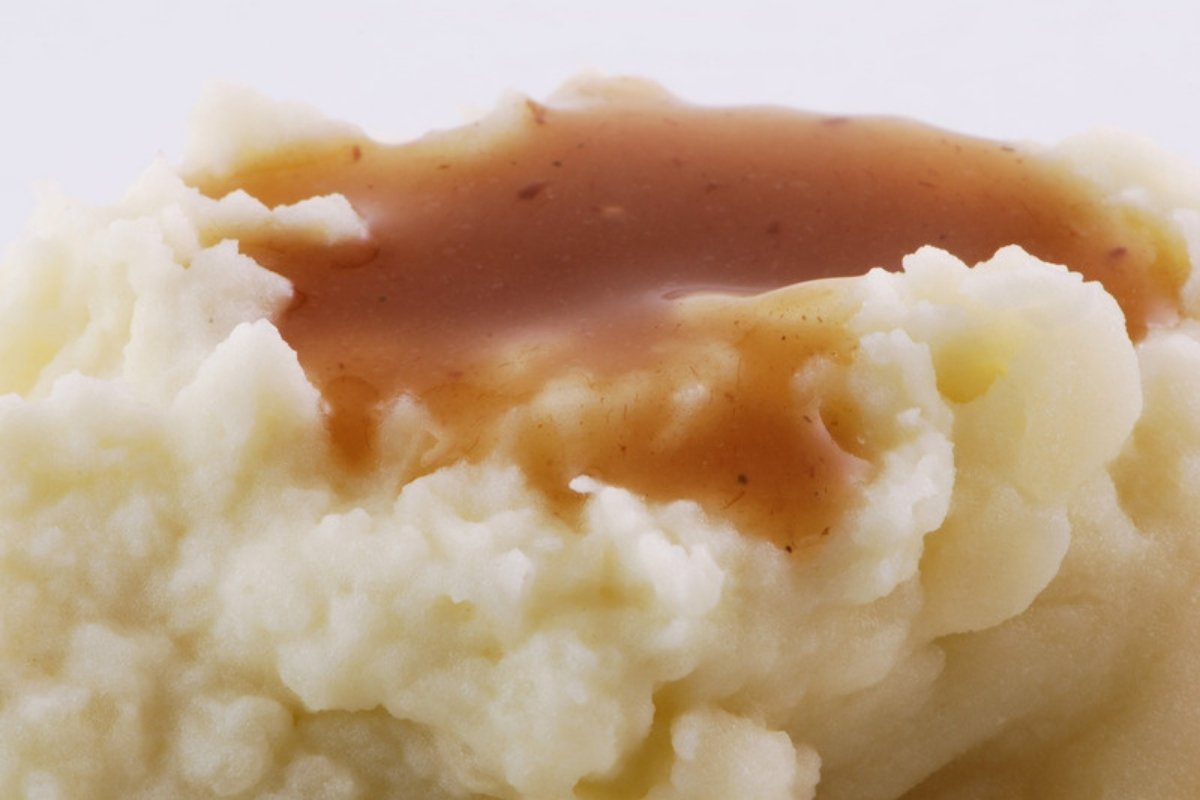
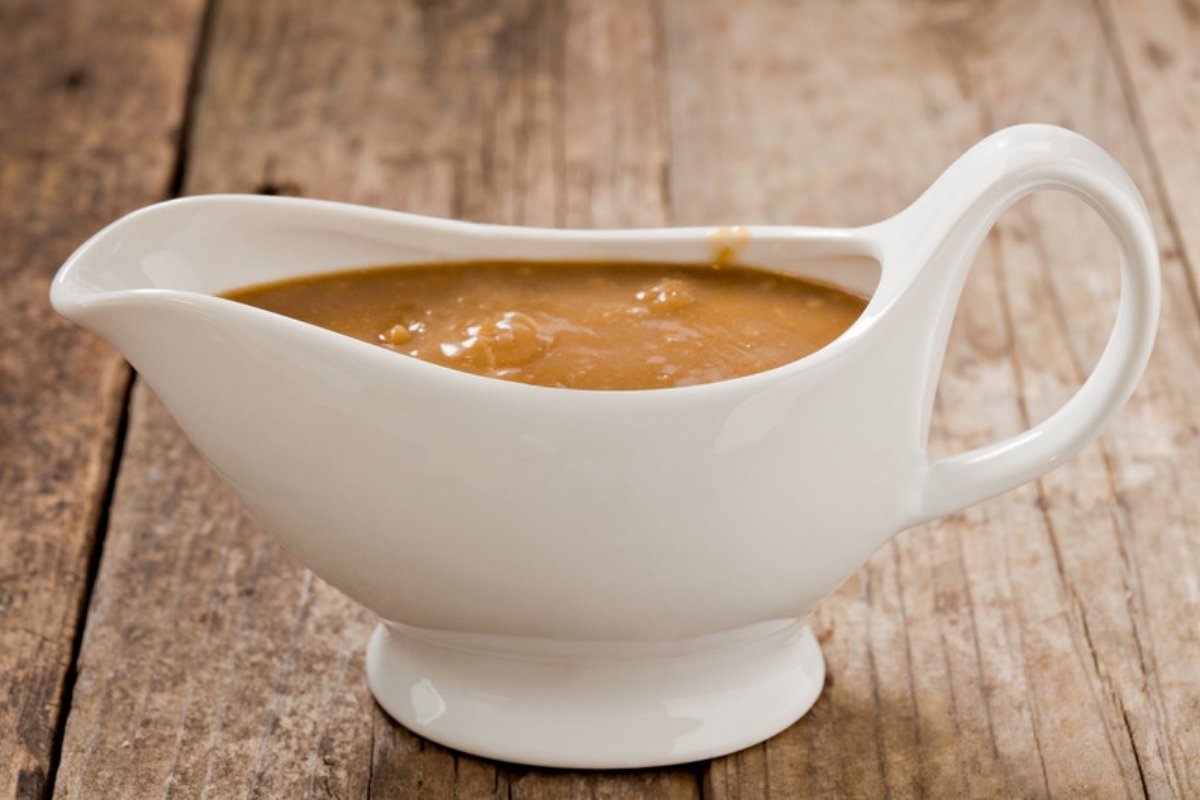
Serve the gravy hot in a warmed gravy boat or a small pitcher so it stays pourable through the meal. It belongs on sliced turkey and mashed potatoes, but it's just as good over stuffing, roasted vegetables, biscuits, or an open-faced leftover turkey sandwich the next day.
How to Store and Reheat Leftover Gravy
- Refrigerate quickly. Get leftover gravy into the fridge within 2 hours of cooking, in a shallow covered container so it cools fast.
- Fridge: Use it within 1 to 2 days, following the FoodSafety.gov storage chart for gravy and meat broth.
- Freezer: Freeze in airtight containers or freezer bags for 2 to 3 months for the best quality. Thaw overnight in the refrigerator.
- Reheat: Warm it in a saucepan, whisking often, and bring it to a rolling boil before serving, as the USDA recommends for leftover gravy. Add a splash of stock if it has thickened too much in the fridge.
Frequently Asked Questions
Can I make turkey gravy without drippings?
Yes. Use 4 tablespoons of butter in place of the turkey fat and 4 cups of good turkey or chicken stock. A teaspoon of soy sauce helps with color and depth.
How much gravy do I need per person?
Plan on about 1/3 to 1/2 cup per person. This recipe makes about 4 cups, enough for 8 to 10 guests, so double it if you want leftovers.
Why is my gravy lumpy?
Lumps usually come from adding the liquid too fast or adding flour straight into hot liquid. Cook the flour in fat first, add warm liquid a cup at a time, and whisk the whole time. If lumps still show up, strain or blend the gravy.
More Recipes
- The Best Kept Secrets to Cook a Turkey Perfectly
- Buttery Garlic Mashed Potatoes with Cream Cheese
- Apple & Sausage Cornbread Stuffing
- Classic Homemade Green Bean Casserole
With the turkey resting and the gravy simmering, the hardest part of the holiday meal is done. Keep the pot warm, set out the gravy boat, and let everyone help themselves.
Other Recipes You’ll Love 😍