
Classic Herb Stuffing Recipe (Easy Make-Ahead Thanksgiving Side)

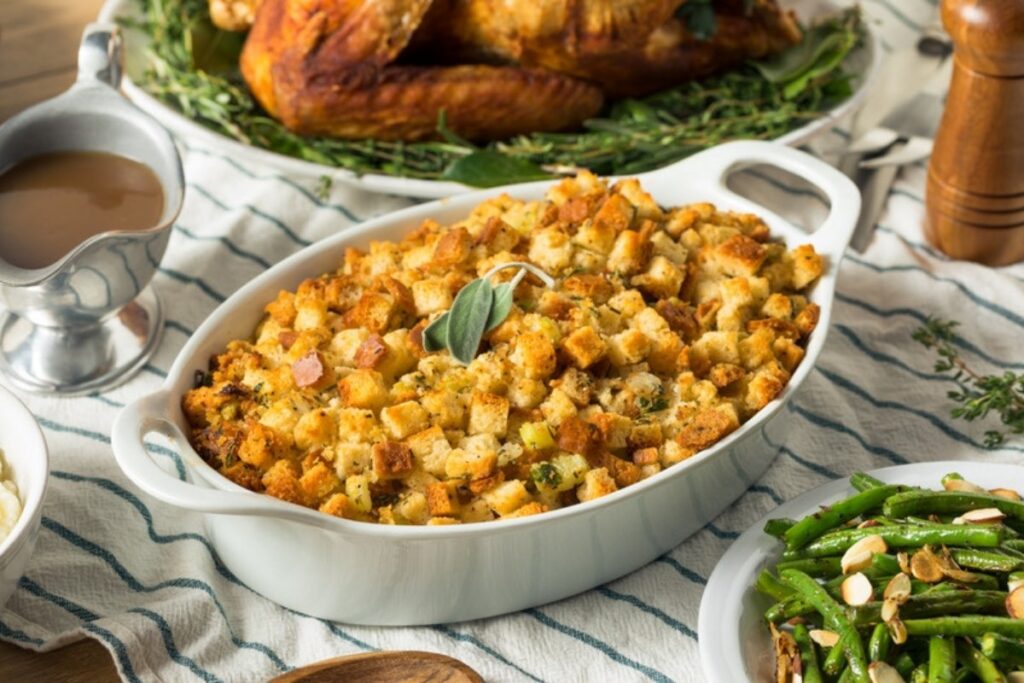
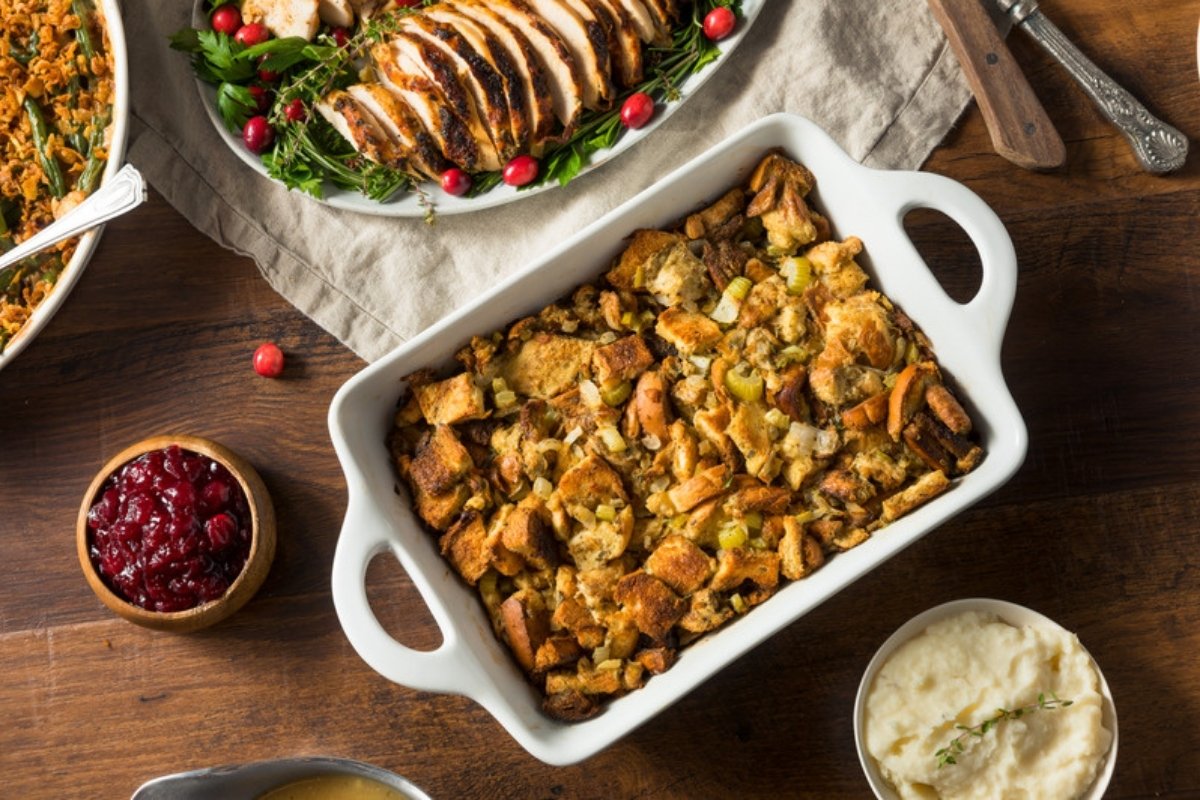
Turkey gets the attention, but stuffing is the dish people go back for. This classic herb stuffing is the simple, old-fashioned kind: cubes of dried bread, plenty of butter, soft onion and celery, fresh sage and thyme, and just enough broth and egg to hold it together. It bakes in a dish instead of inside the bird, so the top turns crisp and golden while the middle stays soft and savory.
It is also one of the easiest Thanksgiving sides to plan around. You can dry the bread days ahead, cook the vegetables the day before, and mix everything right before it goes in the oven.
Why You'll Love This Stuffing
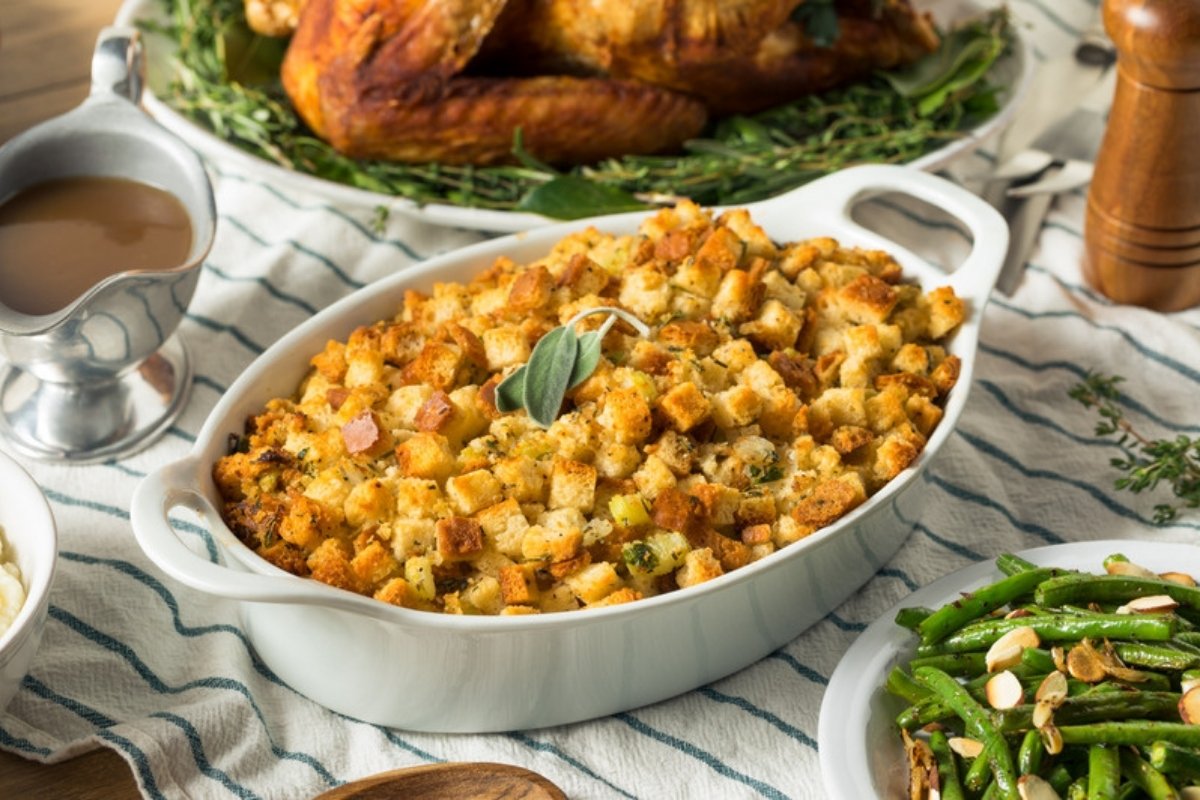
- Crisp top, tender center. Baking it covered and then uncovered gives you both textures in one dish.
- Pantry ingredients. Bread, butter, onion, celery, herbs, broth and eggs. Nothing hard to find in November.
- Make-ahead friendly. Most of the work can be done before the holiday rush.
- Easy to change. Add sausage, apples, mushrooms or dried cranberries, or keep it vegetarian with vegetable broth.
Ingredients
Makes one 9x13-inch dish, about 10 to 12 side servings.
- 1 pound (450 g) sturdy white bread, French bread or Italian loaf, cut into 3/4-inch cubes (about 12 cups)
- 1/2 cup (1 stick, 113 g) unsalted butter, plus a little extra for the dish
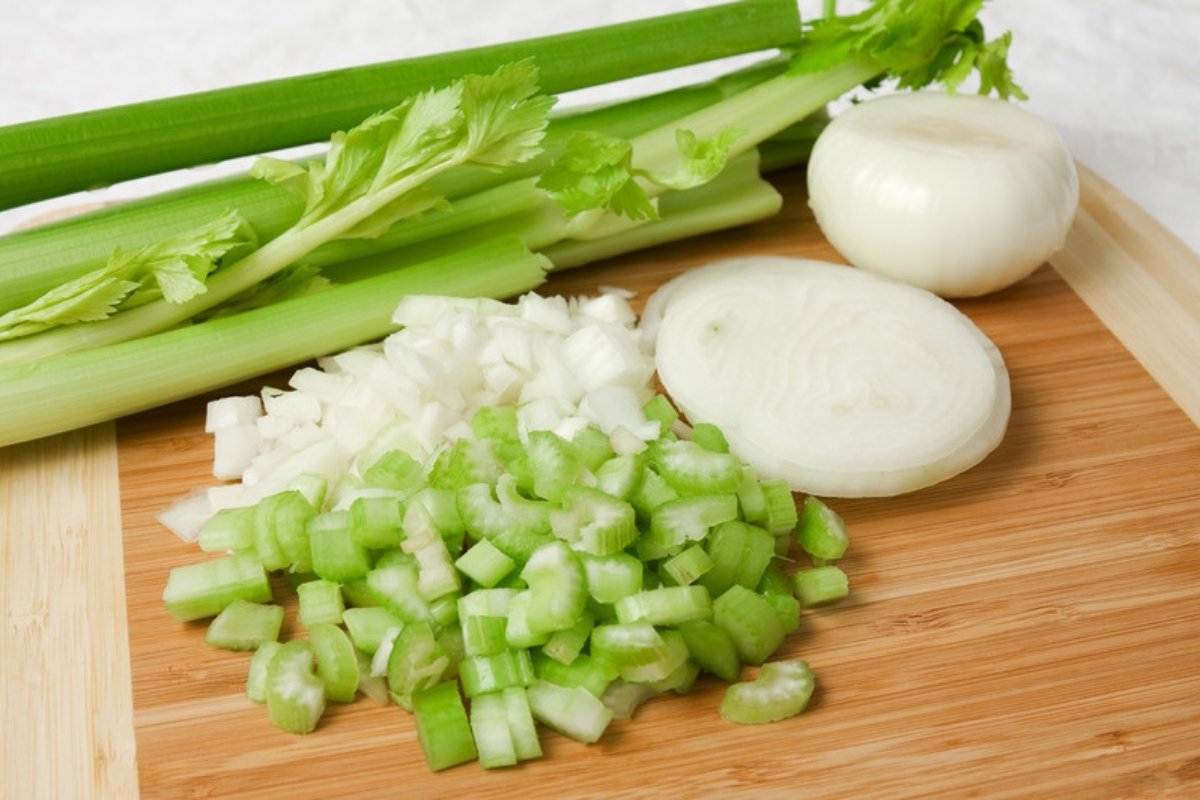
- 1 large yellow onion, chopped (about 2 cups)
- 4 celery ribs, chopped (about 1 1/2 cups)
- 2 garlic cloves, minced
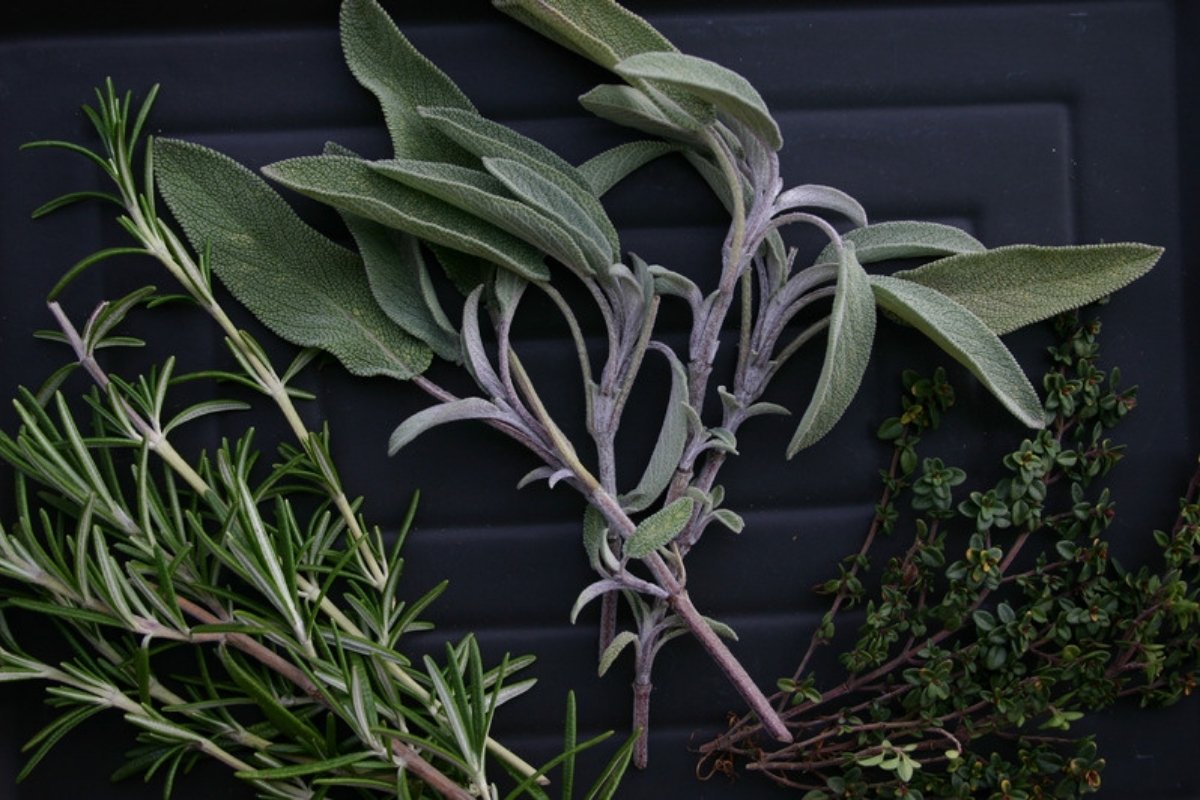
- 2 tablespoons chopped fresh sage (or 2 teaspoons dried rubbed sage)
- 1 tablespoon fresh thyme leaves (or 1 teaspoon dried thyme)
- 1 teaspoon finely chopped fresh rosemary (or 1/2 teaspoon dried)
- 1/4 cup chopped fresh parsley
- 1 teaspoon kosher salt (use 1/2 teaspoon if your broth is regular, not low-sodium)
- 1/2 teaspoon black pepper
- 2 large eggs
- 2 1/2 to 3 cups (600 to 720 ml) low-sodium chicken or turkey broth
How to Make Classic Herb Stuffing
1. Dry the bread
Dry bread soaks up broth without turning to mush, so this step matters. Heat the oven to 250°F (120°C). Spread the bread cubes on two rimmed baking sheets in a single layer and bake for 30 to 45 minutes, stirring halfway, until they feel dry and firm on the outside. Let them cool on the pans. If you have time, you can also leave the cubes out on the counter, uncovered, for a day or two instead.
2. Cook the onion and celery
Melt the butter in a large skillet over medium heat. Add the onion and celery and cook, stirring now and then, for 8 to 10 minutes, until soft and translucent but not browned. Stir in the garlic and cook for 1 minute. Take the pan off the heat and stir in the sage, thyme, rosemary, parsley, salt and pepper.
3. Mix everything together
Heat the oven to 350°F (175°C) and butter a 9x13-inch baking dish. Put the dried bread cubes in your largest bowl and scrape the butter and vegetable mixture over them, including every bit of butter from the pan. Toss well.
In a separate bowl, whisk the eggs with 2 1/2 cups of the broth. Pour it over the bread and fold gently with a large spoon or spatula until the bread is evenly moistened. Let it sit for 5 minutes, then check: the cubes should feel soft and damp, with no dry spots, but there should not be a puddle at the bottom of the bowl. If it still looks dry, add the remaining broth a few tablespoons at a time.
4. Bake covered, then uncovered
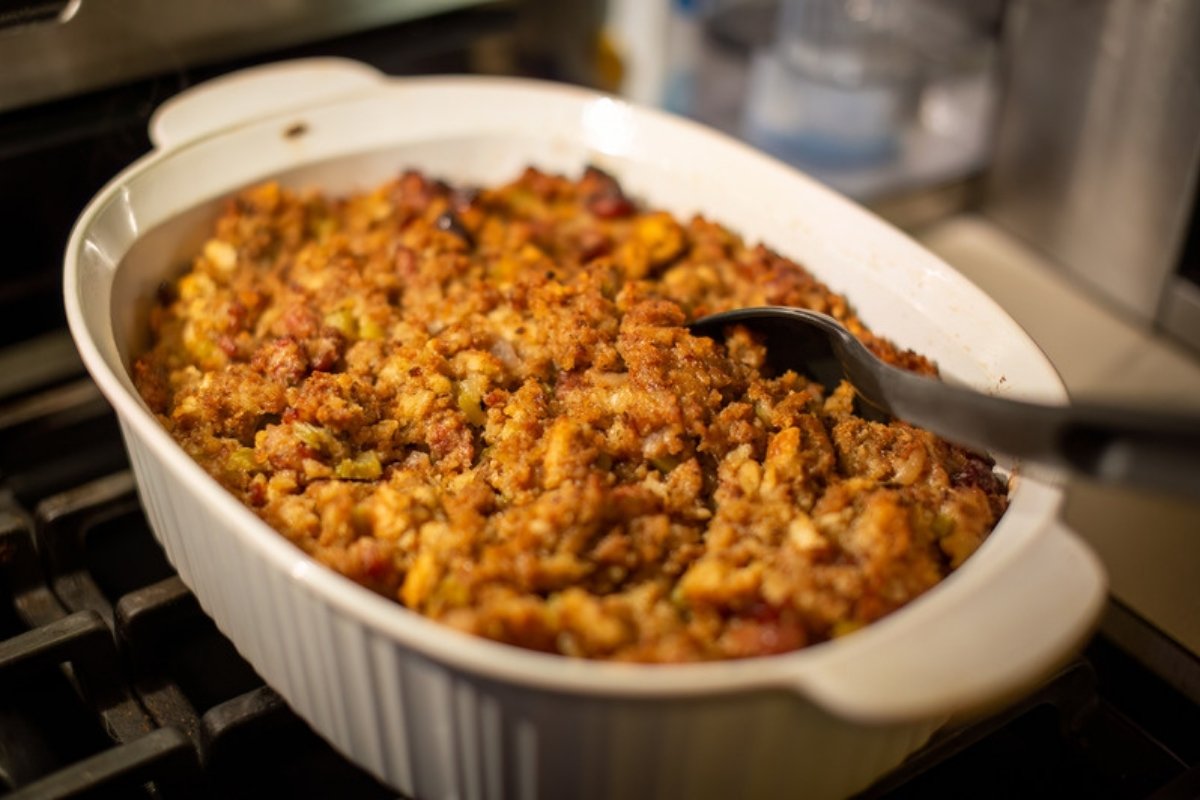
Spread the stuffing in the baking dish without packing it down. Cover tightly with foil and bake for 25 minutes. Remove the foil and bake for another 20 to 25 minutes, until the top is golden and crisp at the edges.
Because the mixture contains raw egg and broth, check the center with an instant-read thermometer. USDA food safety guidance is that stuffing should reach 165°F (74°C). Let it rest for 5 to 10 minutes before serving.
Tips for the Best Stuffing
- Pick the right bread. A plain loaf with a firm crumb works best. Very soft sandwich bread can work if it is well dried, but it breaks down faster.
- Don't skip drying. Fresh bread turns soggy. Day-old bread still needs time in the oven or on the counter.
- Add broth gradually. Bread absorbs liquid differently depending on the loaf and how dry it is. Start with less and add more as needed.
- Want more crunch? Bake it in a wider, shallower dish or leave it uncovered for the full baking time. Want it softer? Keep it covered a little longer.
- Taste before the eggs go in. Try a cube tossed with the vegetables and adjust the salt and herbs at that point.
Easy Variations
- Sausage stuffing: Brown 1 pound of bulk pork sausage in the skillet first, breaking it up, until cooked through (160°F / 71°C). Remove it, cook the vegetables in the butter and drippings, and fold the sausage in with the bread. Reduce the salt to 1/2 teaspoon.
- Apple and cranberry: Add 1 diced apple with the celery and fold in 1/2 cup dried cranberries with the bread.
- Mushroom: Cook 8 ounces of sliced mushrooms with the onion until their liquid evaporates.
- Vegetarian: Use vegetable broth.
- Gluten-free: Use a gluten-free loaf and dry it well, since it tends to be softer.
Make-Ahead, Storage and Reheating
Make ahead: Dry the bread up to 3 days in advance and keep it in a sealed bag once it is completely cool. Cook the onion, celery and herbs a day ahead and refrigerate them. On the day, combine the bread, vegetables, eggs and broth right before baking. Mixing the wet and dry ingredients just before it goes in the oven is what USDA recommends for stuffing.
Bake ahead: You can also bake the stuffing a day early, cool it quickly and refrigerate it. Reheat it covered at 350°F (175°C) for 20 to 30 minutes, adding a splash of broth if it looks dry, then uncover for the last few minutes to crisp the top.
Leftovers: Refrigerate within 2 hours of serving in a shallow covered container. Eat within 3 to 4 days, or freeze for up to 1 month. Reheat leftovers until hot all the way through, to 165°F (74°C).
Frequently Asked Questions
What is the difference between stuffing and dressing?
Traditionally, stuffing is cooked inside the turkey and dressing is baked in a separate dish. Today the names depend mostly on where you live, and many people call both versions stuffing. This recipe is baked in a dish.
Can I cook this stuffing inside the turkey?
USDA recommends cooking stuffing in a separate dish because it is easier to cook it safely. If you do stuff the bird, mix the stuffing right before it goes in, fill the cavity loosely, and check that the center of the stuffing reaches 165°F (74°C), even if the turkey is already done.
My stuffing came out soggy or dry. What happened?
Soggy stuffing usually means the bread was not dry enough or too much broth was added at once. Bake it uncovered for a few more minutes to dry the top. Dry stuffing needs more liquid: drizzle a few tablespoons of warm broth over it, cover and return it to the oven for 10 minutes.
More Thanksgiving Recipes
- Easy Turkey Gravy from Pan Drippings
- Soft Homemade Dinner Rolls
- Classic Homemade Green Bean Casserole
- Roasted Brussels Sprouts and Sweet Potato
Make a double batch if you have a big crowd. Leftover stuffing is just as good the next day, especially next to a turkey sandwich.
Other Recipes You’ll Love 😍